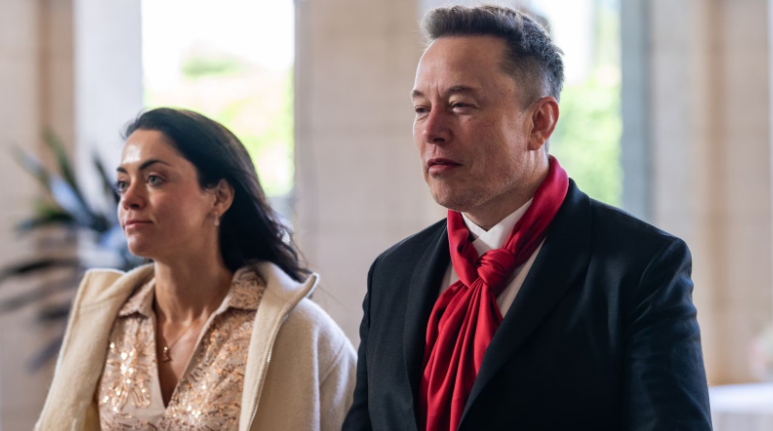
Several days into Elon Musk’s consequential civil case against OpenAI, one individual has appeared in testimony from witnesses on both sides: Shivon Zilis.
Zilis is a veteran executive at Musk’s firms, Tesla and Neuralink, and also the mother of four of his children. Yet her earlier position as a quiet intermediary connecting Musk and OpenAI’s leadership has drawn attention as the court proceedings, which started on April 28, continue before US District Judge Yvonne Gonzalez Rogers in a federal courtroom in Oakland, California.
Musk’s 2024 lawsuit centers on OpenAI’s transition toward a for-profit model, which allegedly abandons its initial nonprofit purpose of developing artificial general intelligence (AGI) for the good of humanity. In addition to leadership-related changes, Musk is pursuing $150 billion in damages from OpenAI and Microsoft, one of its biggest investors.
Zilis has attracted notable scrutiny as a witness because of her uncommon position of maintaining strong relationships with Sam Altman and Greg Brockman during OpenAI’s early development, while at the same time remaining within Musk’s close inner circle and serving as a trusted adviser in many respects. As she gets ready to testify today (May 6), here is a deeper look at her academic background, professional path, and why her testimony may prove significant to the jury.
Zilis was born in Ontario, Canada. She is half-Indian and was adopted as an infant, according to Musk. She attended Yale University, where she competed on the women’s ice hockey team. Zilis graduated in 2008 earning a degree in economics and philosophy. Although she has spent most of her career working for Musk, Zilis initially worked on cognitive computing and financial technology projects at IBM.
She left after three years and became a founding member of Bloomberg Beta, the venture capital (VC) division of Bloomberg, where she directed investment initiatives in data and machine learning, according to a report by Business Insider. In 2015, Zilis was included in Forbes’ ‘30 Under 30’ list for VC.
From 2017 to 2019, Zilis served as a project director at Tesla, where she was involved with the EV-maker’s chip design groups and contributed to the development of its Autopilot program. Zilis later moved to Neuralink, the futuristic brain-chip company also cofounded by Musk, where she now serves as Director of Operations and Special Projects.
In 2016, she joined OpenAI initially as an informal adviser, and later became a director on its nonprofit board from 2020 to 2023. During that period, she managed operations-related responsibilities such as obtaining bids for security personnel at the office building shared by OpenAI and Neuralink, according to emails revealed in the case.
Relationship with Elon Musk
In a deposition, Zilis stated that her romantic relationship with Musk started around 2016, the same year she joined OpenAI as an informal adviser. The pair had their first two children in 2021, she told OpenAI’s attorneys. Altogether, they share four children: twins Strider and Azure, daughter Arcadia, and son Seldon Lycurgus.
Musk has previously mentioned that the middle name of one of his sons with Zilis is ‘Sekhar’, selected in tribute to Indian-American physicist and Nobel Prize winner Subrahmanyan Chandrasekhar. Musk and Zilis also reportedly share an enthusiasm for fantasy and video games like Elden Ring, a title featuring dungeons and warriors and recognized for its difficult gameplay.
Still, the precise nature of Zilis’ relationship with Musk seems somewhat uncertain. For example, during his testimony, Musk described Zilis as his chief of staff at one moment while also referring to her as a close adviser in another statement. He additionally testified that they live together, although Zilis said in her deposition that Musk is more of a frequent visitor and maintains a separate residence.
Was she Musk’s eyes and ears at OpenAI?
Zilis’ importance in the case relates to two separate periods: before Musk departed OpenAI, and afterward. In 2017, OpenAI developed an AI bot that defeated a professional human competitor in the Dota video game. After the achievement, its co-founders, including Musk, began discussing revisions to the organisation’s corporate structure. Musk wanted complete control of the proposed for-profit entity at the outset, according to OpenAI’s attorneys.
During that period, Zilis informed Musk that she had met with Brockman and co-founder Ilya Sutskever to talk about how equity would be allocated in the new company. Summarising details from her meeting, she said that Brockman and Sutskever believed a single person should not hold unilateral authority over AGI, if they succeeded in developing it, according to an email sent from Zilis to Musk.
“This is very annoying. Please encourage them to go start a company. I’ve had enough,” Musk responded. The equity split discussions continued, and Zilis kept serving as an intermediary for both parties. After Altman and others refused to grant Musk full or majority control, he formally left OpenAI’s board in February 2018 to pursue AGI at his own company, Tesla.
However, Zilis reportedly kept serving as a liaison between him and OpenAI’s leadership for years afterward. “Do you prefer I stay close and friendly to OpenAI to keep info flowing or begin to disassociate? Trust game is about to get tricky so any guidance for how to do right by you is appreciated,” Zilis wrote in a text message to Musk.
“Close and friendly, but we are going to actively try to move three or four people from OpenAI to Tesla. More than that will join over time, but we won’t actively recruit them,” Musk replied. Two months later, Zilis updated Musk regarding OpenAI’s fundraising initiatives and the progress of its Dota AI bot.
Zilis appears to have remained in close communication with Sam Altman as well during this period.
In 2023, shortly after Musk had acquired Twitter, Altman texted Zilis, asking, “Good idea for me to tweet something nice about Elon?” A few days later, he posted on X that “society underestimates how much it owes Elon for raising the collective ambition level at a time when optimism for the future was receding.”
Zilis ultimately departed OpenAI’s board in 2023, the same year Musk launched his competing venture, xAI. When questioned about his communications with Zilis, Musk said that he wanted to understand what was happening at OpenAI. He further testified that Zilis never shared any confidential information about OpenAI with him that she was not permitted to disclose.
In response to Musk’s lawyers, Brockman testified that he had first met Zilis in 2012 or 2013. “She [Zilis] was essentially Elon’s liaison to OpenAI. So she was kind of our proxy Elon in some ways,” he said. “Unless it was something that was intended, like, explicitly not for Elon, I would expect she would share it,” he added.
On Wednesday, when Zilis takes the stand, OpenAI’s lawyers are expected to closely examine her role as a discreet liaison between OpenAI and Musk, even years after he departed the nonprofit’s board.