INMASTERMIND
On August 5, Jammu & Kashmir marked the seventh anniversary of the reading down of Article 370 and the downgrading of the state into two Union Territories. The Modi government’s 2019 decision remains a significant faultline in the politics of the region. The Bharatiya Janata Party (BJP) hailed the occasion as the completion of J&Ks constitutional integration with India, while Kashmiri parties like the National Conference (NC) and People’s Democratic Party (PDP) – who regard it as a reminder of unresolved political and constitutional grievances – organised protests.
The Congress also marked August 5 as a “Black Day” with its leaders condemning the downgrading of the state into a UT and demanding the restoration of statehood.
Despite the change of status – or perhaps because of it – J&K’s politics has shown considerable dynamism, as reflected by participation in the Lok Sabha elections of 2024 and the UT Assembly polls that produced an elected government currently headed by Omar Abdullah. In an interview with Karan Thapar in The Wire, Omar has voiced frustration at the pace of developments. He indicated that he had made considerable efforts to work with the Union government, which is in effective control of the UT, but the result has been that he has lost political capital in the process without corresponding returns.
Essentially, he is referring to the restoration of statehood. The Supreme Court Constitution Bench that upheld the reading down of Article 370 in a judgement of 2023 had also directed the Election Commission to conduct the assembly elections by September 30, 2024. Importantly, it had called for the restoration of complete statehood for J-K at the earliest.
Nearly three years later, there are still no indications that the Modi government intends to do that.
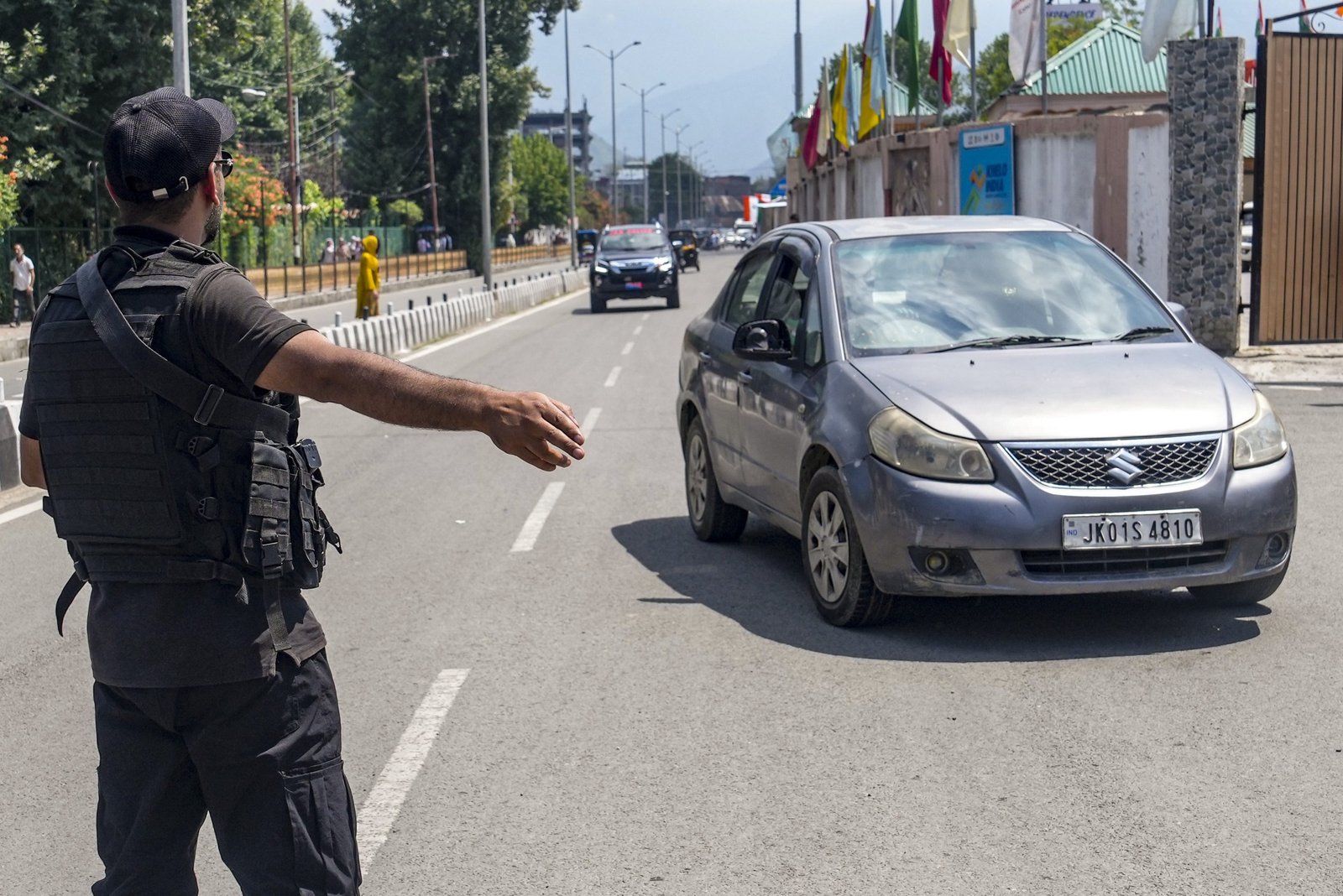
There is no question that violence in J-K has declined. Going by the metric of the loss of security personnel, we can see that where 78 were killed in 2019, the figures since have fallen— 56 (2020), 45 (2021), 30 (2022), 33 (2023), 26 ( 2024), and 17 (2025). But precisely why this has occurred is uncertain. It could be because of the continued and substantial deployment of security forces in the Valley. Or, it could be a consequence of turbulence in Pakistan which has long backed the Kashmiri separatists.
Yet this situation remains far from normality. Last year’s horrific massacre in Baisaran meadow near Pahalgam may have been a one-off incident in terms of scale and brutality, but sporadic violence continues to trouble J&K and a substantial number of people remain incarcerated in its jails on national security grounds. Data by the South Asia Terrorism Portal will show that apart from continuing arrests and some arms recoveries, there have been several violent incidents in the month of July. A police officer was shot dead on July 22 in Anantnag. He was part of the security detail for the Amarnath Yatra. On July 31, two migrant workers from Chattisgarh were killed by terrorists in Kulgam district. A new element of the law and order situation is the activity of narcotics smugglers, who appear to have become particularly active in the UT. But while instances of violence may have declined, the situation in J&K continues to be poor and is demonstrated more by the ongoing police action against separatists, and especially their alleged supporters.
A move aimed at scoring political brownie points
Jammu & Kashmir has been poorly served by the powers that be in New Delhi. The reading down of the already hollowed out Article 370 was intended to score political brownie points and has damaged the sentiments of the people in the Valley, rather than accomplishing anything else. In its 2023 judgment, the Supreme Court resorted to sleight of hand to uphold the Union government’s actions, instead of candidly addressing the legal conundrum. As for the demotion of the state, the court left the matter unresolved. It chose not to confront the foundational constitutional question of whether Article 3 of the Constitution gives Parliament the authority to extinguish a state’s existence.
In summary, the court validated the legal mechanisms used to reorganise the territory (including President’s Rule interventions and carving out Ladakh), but avoided establishing a precedent on the wider power to demote a state into a UT by relying on the government’s assurance that statehood for J&K would be restored.
Ostensibly there is peace in the Jammu & Kashmir area and violence has declined sharply. Yet there are reasons to distrust this surface calm and neither do the people of the state trust it.
A hallmark of just how abnormal the situation remains was highlighted by an item based on a parliamentary committee report in the Hindustan Times last week that only 3 of the 6,500 Kashmiri migrant families which had initially indicated a willingness to return to the region have permanently returned to the Valley. The committee has asked the government for a comprehensive assessment of the issues preventing them, including security and livelihood.
On June 30, more than 100 prominent citizens from India and Pakistan, including separatist leader Mirwaiz Umar Farooq and former J&K chief ministers Farooq Abdullah and Mehbooba Mufti, urged prime ministers Narendra Modi and Shehbaz Sharif to revive bilateral dialogue and restore normal relations.
The letter coordinated by O P Shah, chairman of the Centre for Peace and Progress, was signed by 61 Indians and 55 Pakistanis, including former R&AW chief A.S. Dulat, former Pakistan foreign minister Khurshid Mahmud Kasuri, and former Pakistan high commissioner to India Ashraf Jehangir Qazi called for the restoration of diplomatic ties, resumption of visa series, the reopening of trade and transport links and discussions on India-Pakistan issues including Jammu & Kashmir.
There has been no formal response to the letter. Around the time the letter was circulated, Indian foreign secretary Vikram Misri formally rejected reports of backchannel meetings between the two countries. Indeed, the Ministry of External Affairs reiterated that relations – including the Indus Waters Treaty – will remain frozen until Pakistan credibly and irrevocably ends state-sponsored cross border terrorism.
But the reality is that the complete restoration of normality in the state will require the measures suggested by the authors of the letter. Besides the question of addressing domestic sentiment, New Delhi will have to engage with Pakistan. This is not an impossible task, but it is a difficult one. But the crucial thing is to make a start.